Johnny Roque — Opening Set Opener
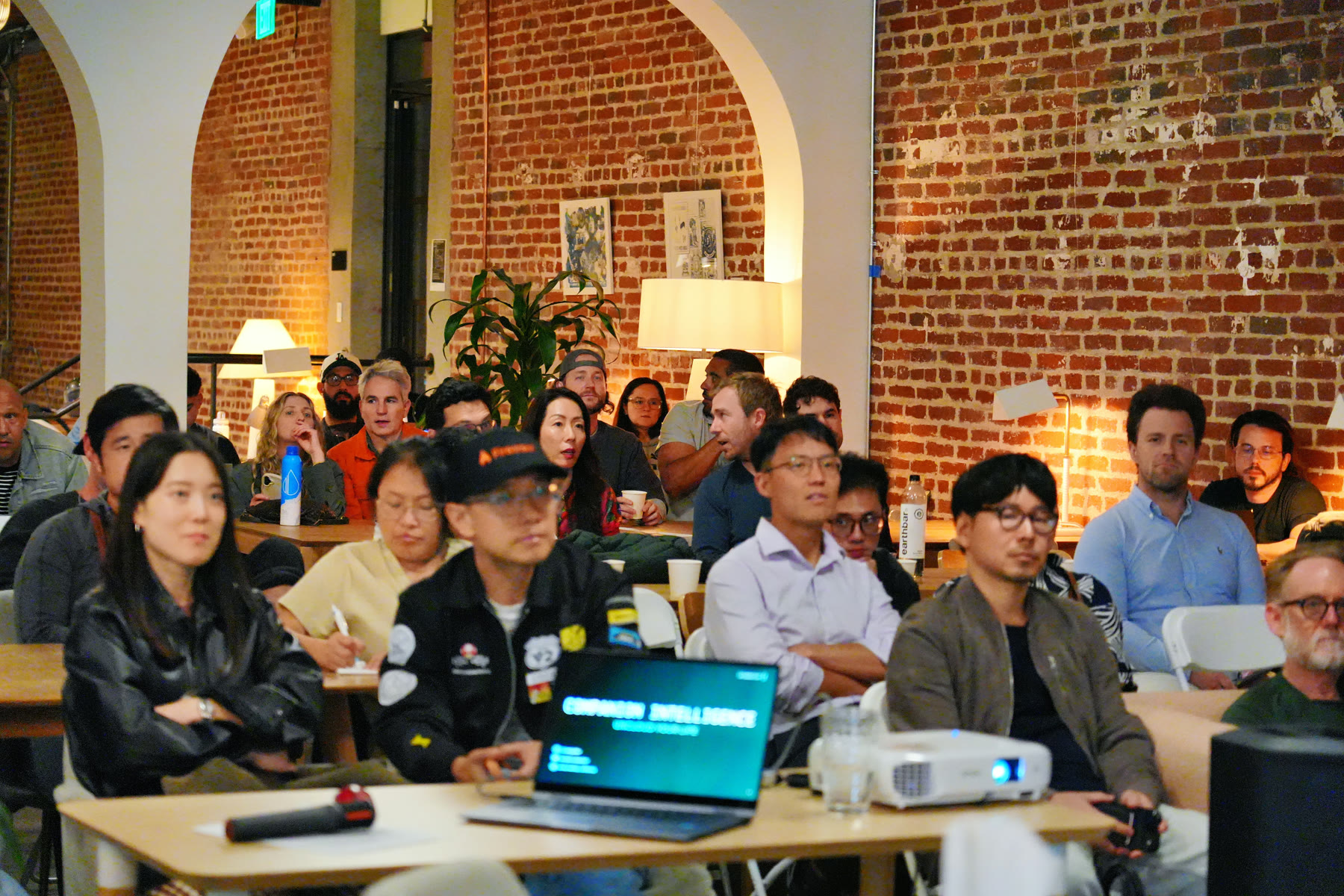
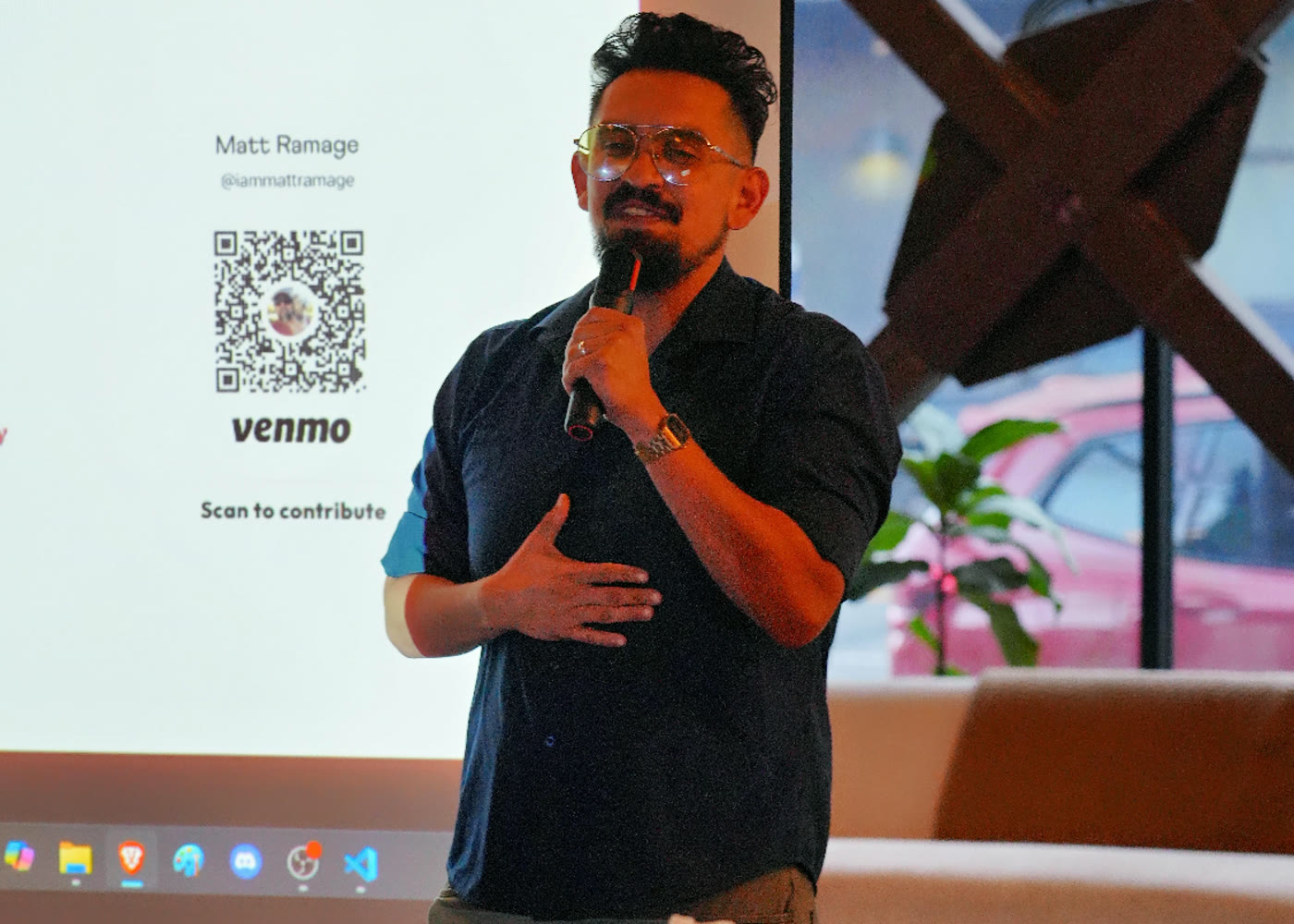
We kicked things off differently this time — with a comedian. Johnny Roque delivered a sharp, hilarious set that leaned into the AI-obsessed crowd in the room. He riffed on how AI replaced workers faster than anyone expected, how it levels the playing field for people who "can't afford" full-time help, and why big corporations using AI is a different story entirely.
The crowd loved it, and it was a perfect warm-up for the technical deep dives that followed.
Catch more of Johnny at youtube.com/@RoqueJohnny
Bill Kreutinger — Joe Penclaw: Self-Hosted OpenClaw on Consumer Hardware
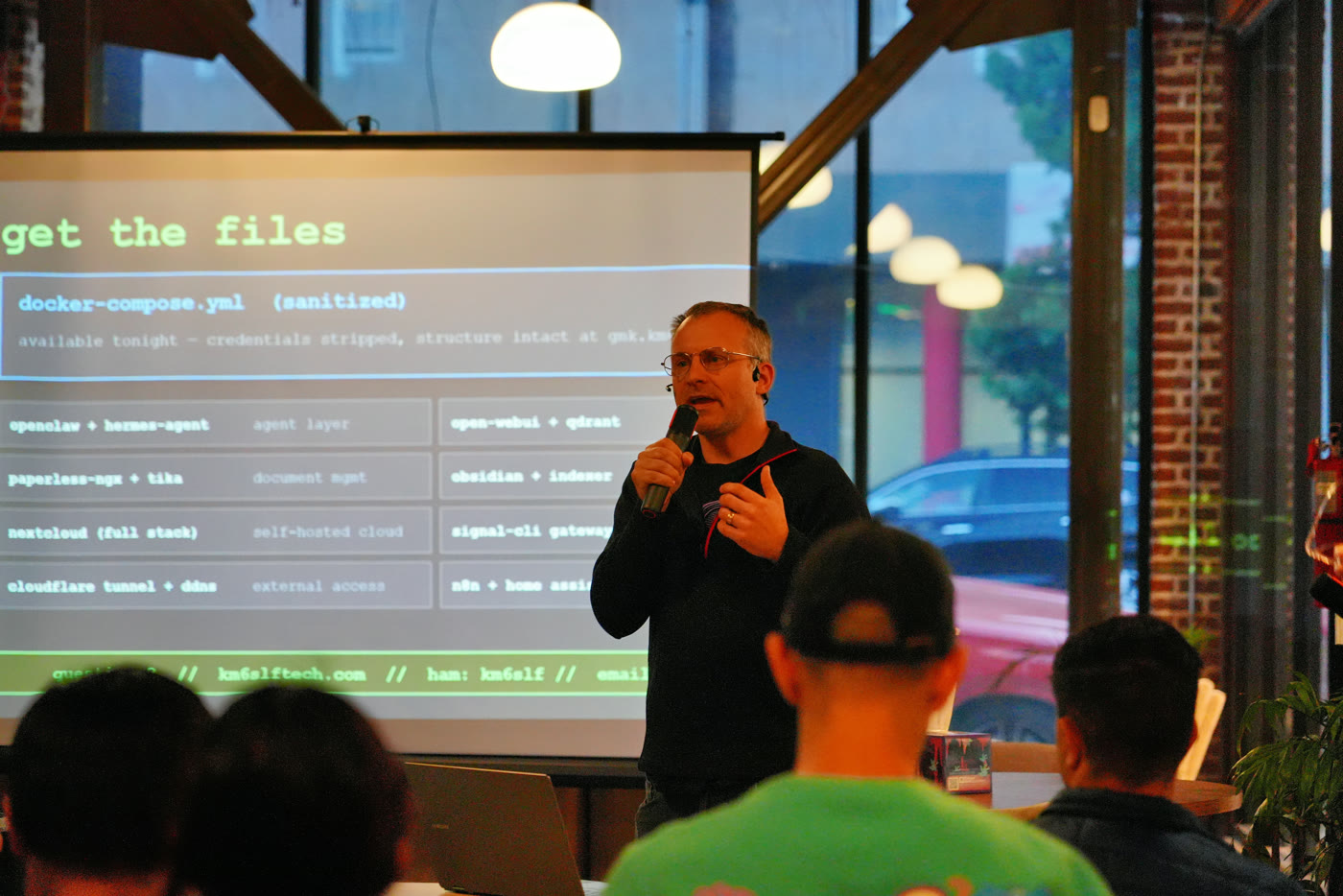
Bill opened with a confession: when he first looked under the hood of OpenClaw, he found "an LLM, a RAG directory, and a messaging gateway — basically three neat things in a trench coat." But what he's built with those three things is genuinely impressive.
The setup. Everything runs on a GMK K12 mini PC with an externally attached RTX 3090, plus a ZimaBoard 2 with a Tesla V100 (which he picked up for around $500 — a steal compared to an A100). It all sits on Proxmox with Ubuntu and Docker. He named his agent Joe Penclaw, and Joe is wired into his entire personal stack via MCP.
What Joe can do
- Read and summarize Bill's Obsidian notes, saving article summaries to a separate folder so he can catch up on reading later
- Auto-tag and file scanned documents via Paperless NGX — "the service I was least excited about but get the most use out of"
- Post drafts or publish to his personal blog via API key
- Serve a live website through Cloudflare in minutes via a single write command to his web root directory
The live demo landed. Bill sent a single WhatsApp message to Joe: "Create a new file in your web root directory called demo.html. Include the latest image from my WhatsApp files directory. Greet the attendees of OpenClaw LA's May 27th meeting. Use a dark blue background with colorful accents." He scanned the QR code, and it worked. The site was live.
Bill also shared his full Docker Compose file at gmk.km6slftech.com, including an OpenRouter-based version for those who haven't stocked up on GPUs.
Find Bill's setup at gmk.km6slftech.com
David Guttman — Clawkie Talkie
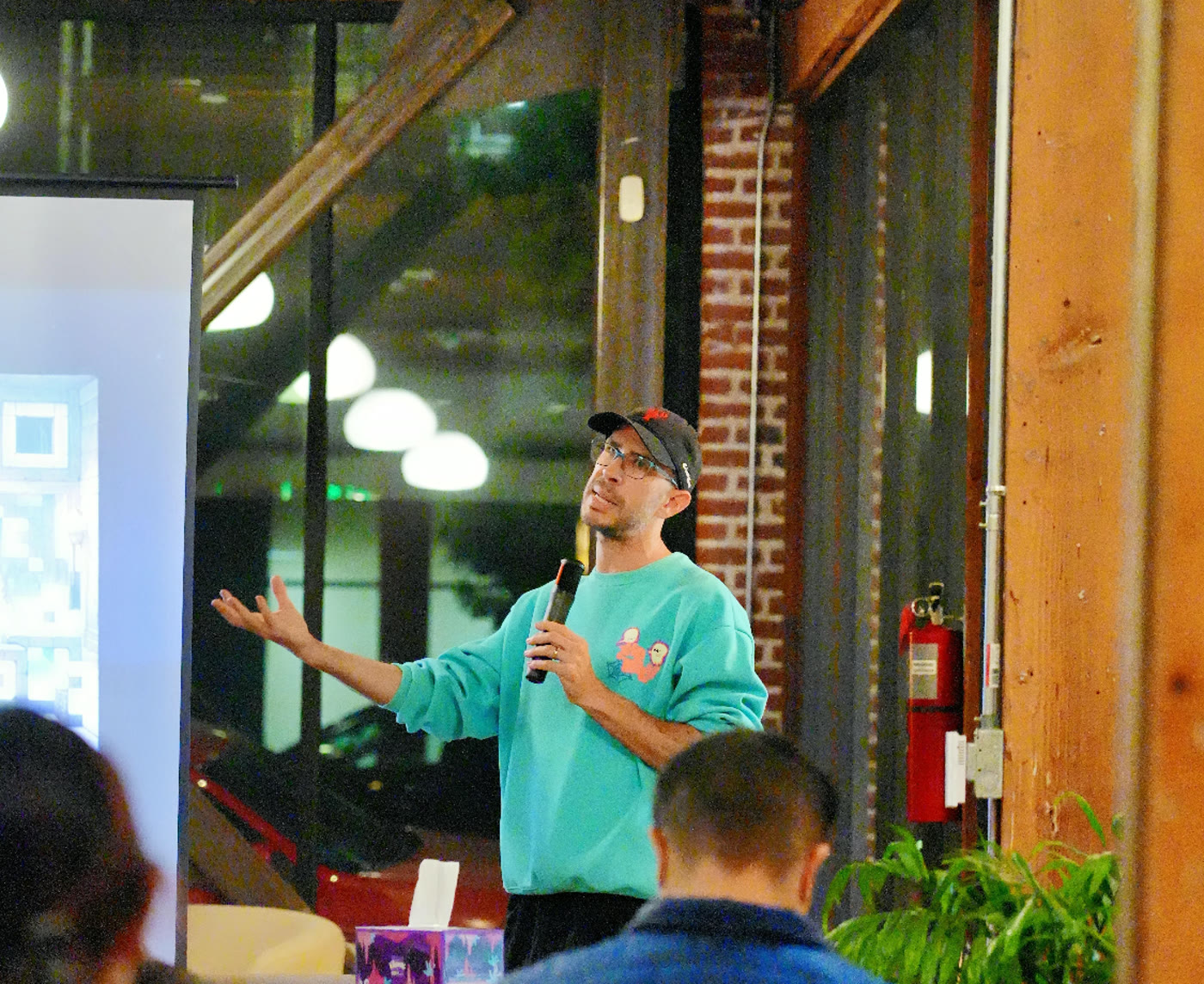
David is an OpenClaw contributor who sets up AI employees for founders and solopreneurs. His talk traced a multi-year journey to answer one question: how do I use AI agents without being at a desk?
He walked through his progression — remote desktop on a phone, Aider, Vibe Mob, Claude Code over SSH with Tmux — until OpenClaw finally made it click. Now he manages everything through Discord and doesn't touch Claude Code or Codex directly anymore. His agent orders his lunch, helped hire a nanny (including building a temporary Kanban hiring pipeline), and handles weekly payroll through Poppins Payroll, including the multi-factor authentication.
But the car was the last holdout. Voice mode in ChatGPT got worse when they optimized for latency. Whisper Flow into Discord had noise issues. Discord voice channels had no session separation. So he built Clawkie Talkie — a car-friendly walkie-talkie interface for OpenClaw.
Key design decisions
- A large push-to-talk button — no open mic, no interruptions, no background noise bleeding in
- Hold music while the agent processes — both an audio loading indicator and, critically, what keeps the iOS app alive with the screen locked
- Separate thread/session management, which David considers non-negotiable: "I honestly don't know how people use OpenClaw in one long soup of messages"
He also leaned into taste and style in the build — custom audio filters, walkie-talkie crackle, a web app for tuning the hold music — arguing that with AI doing so much of the heavy lifting, you should use that freed-up time to make something distinctly yours rather than defaulting to generic AI output.
Follow David at x.com/davidguttman
Liam Broza — Companion Intelligence
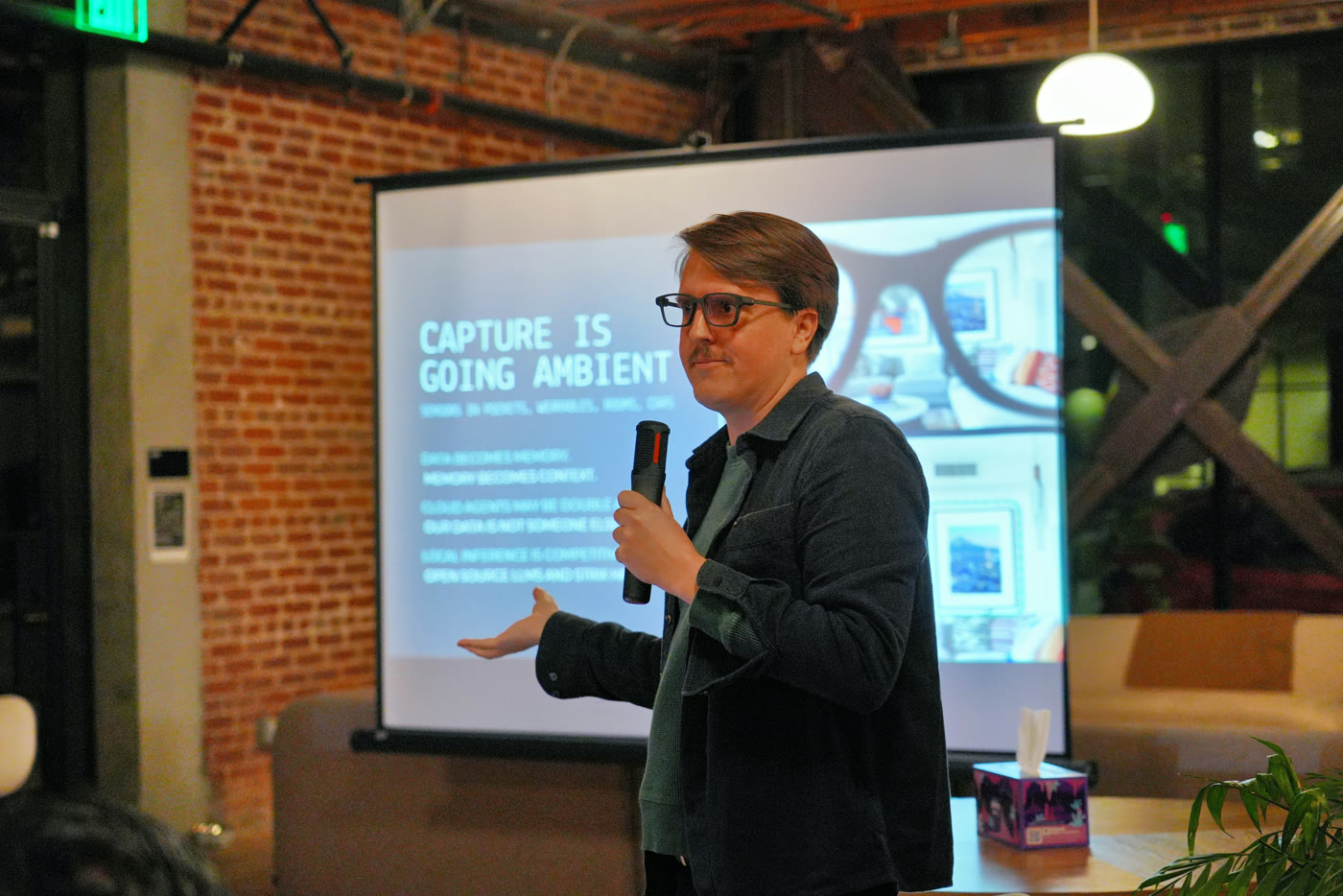
Liam from Companion Intelligence came in wearing open-source AI glasses (yes, with a terminal visible through the lenses) to pitch something genuinely ambitious: getting off the cloud entirely.
Companion Hub. His company built ci.computer/hub, a piece of software that turns any Windows, Mac, or Linux machine into a personal server. It scans your system, recommends the best local models for your hardware, and walks you through installing OpenClaw, Hermes, or a growing list of self-hosted apps — Nextcloud, Mattermost, Jellyfin, Comfy UI, headless Steam with Moonlight, and more.
The kicker: the hub is itself an MCP server. It auto-installs into Claude or Hermes, meaning you can say "I have a presentation Friday, put together an update" and it will spin up the relevant MCPs, generate the assets, and shut the services back down when done.
Companion Cores. Companion Intelligence also sells pre-built hardware with 128GB AMD APUs capable of running 200B parameter models. Designed for families and small teams of four to six people, they're being financed at $128/month to slot in as a replacement for what most people already spend on cloud subscriptions.
Companion Memory. The piece Liam was most excited about: a personal digital twin that pulls together your location history, communications, photos, services, and browsing into a structured timeline. The goal is real, deep personal context for your AI — not just a folder of markdown, but an actual understanding of your life and habits.
Companion Intelligence: ci.computer
Damian Finol — Secure Agentic Systems & DevSecOps at Felix Pago
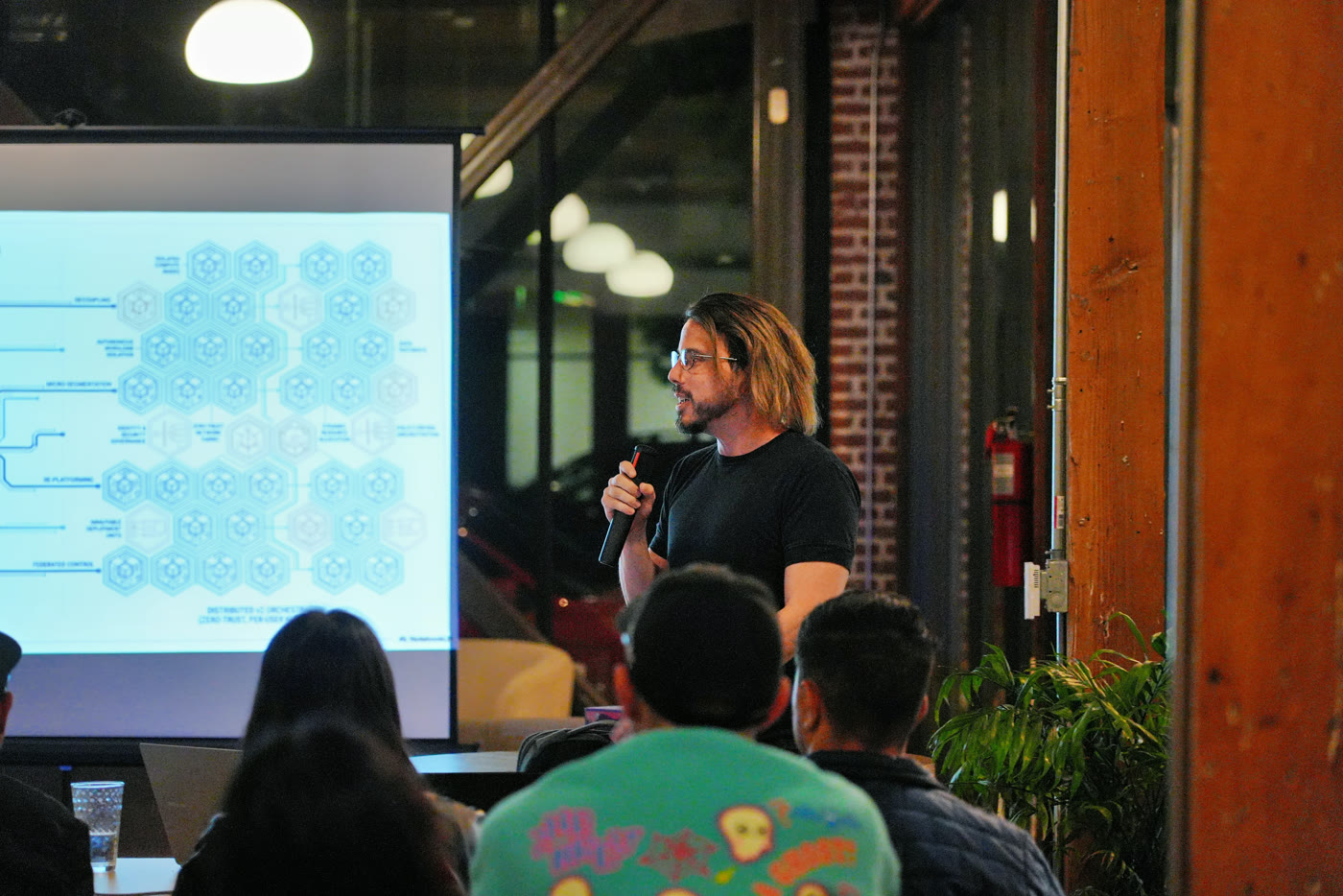
Damian closed the night with the most technically ambitious talk of the evening. He works at Felix Pago, a fintech company, and spent the past month building an agentic intranet where every employee gets their own fully isolated OpenClaw instance — zero environment variables, enterprise-grade security throughout.
Five architectural non-negotiables
- Least privilege. Every credential is short-lived, scoped to a single action, and minted at request time. If a token escapes, it expires within minutes.
- Explicit trust boundaries. An event router proxies all Slack messages to the correct user pod; nothing talks directly to anything it shouldn't.
- Immutable evidence. Every syscall and kernel call from every agent is logged and available for analytics.
- Human in the loop. A policy engine gates destructive actions behind out-of-band confirmation before a token is issued to execute them.
- Defense in depth. Full inter-pod firewall, mesh isolation, no pod-to-pod communication without explicit permission.
The implementation. Each employee gets their own Kubernetes pod, their own OpenClaw gateway, and their own identity via SPIFFE workload identity federation. Credentials flow through Vertex AI's Workload Identity Federation — no Google Application Credentials ever touch the machine. His patch enabling this was merged into OpenClaw main two days before the talk.
The practical results
- Customer service agents at Felix Pago used to spend an average of 30 minutes diagnosing transaction issues. With agents having read access to service logs and transaction data, that's down to under four minutes.
- Engineers query the bot about any of hundreds of internal services and get contextualized answers.
- New hires use it to debug errors with full codebase context from day one.
Damian also demoed the agentic intranet UI live — employees can visit a colleague's profile, interact with their agent, and submit PRs or docs for pre-review before the human ever touches them.
Follow Damian at linkedin.com/in/damianfinol